
Can Energy Work Support You Through Stress and Emotional Overwhelm?
If you feel overwhelmed, on edge, or emotionally worn out, you're not failing. Many people in that place are doing everything they can to cope and still feel like their body hasn't gotten the message that it's safe to rest.
Stress and strong emotions don't only live in the mind. They also show up in the body and the nervous system. That's why so many of us try to think our way out with logic, positivity, or willpower, and find that the pattern stays.
What these experiences can be telling you
Stress is your body's response to overload. Anxiety can be a state of staying on alert even after the danger has passed. Low mood can feel like heaviness, shutdown, or distance from things that used to matter.
These aren't flaws. They're signals that your system has been under pressure, that emotions haven't had room to move, or that something was too much to process at the time. Anxiety and depression are also real health conditions that deserve proper care. If they're affecting your daily life, please talk with your doctor or a mental health professional.
Where energy work fits
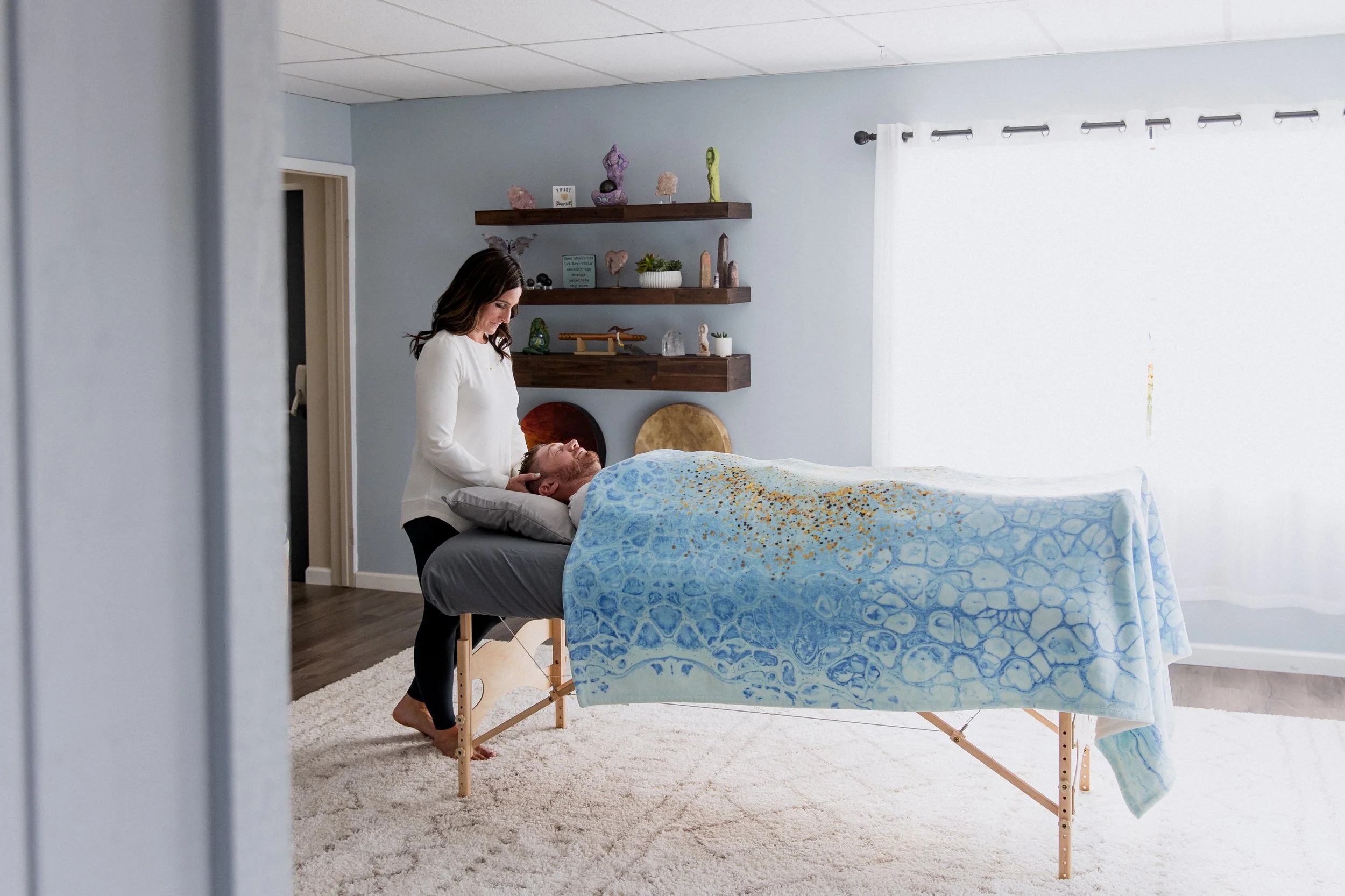
Energy work is a gentle, non-invasive practice. It doesn't ask you to explain, retell your story, or figure anything out. The goal is to give your body a calm, supported space to settle.
During a session, people often describe:
Deep relaxation or a sense of being grounded
Emotional release without having to talk it through
Feeling more present in their body
Feeling lighter or calmer afterward
Many also notice better sleep, clearer thinking, and more ease in the days after, not because life has suddenly changed, but because their body isn't bracing quite as hard. Experiences vary from person to person.
Alongside other care, not instead of it
Energy work is a complementary practice. It works best as one part of a broader picture that can include therapy, medical care, medication when needed, and support from people you trust. I don't diagnose or treat any condition, and I'd never suggest stopping care that's helping you.
Healing doesn't have to be forceful. You don't have to push yourself to feel better or fix anything about who you are. Sometimes the most supportive thing is to slow down, listen, and let your system find its own rhythm again.
If you'd like to try it
An Energetic Reset is a good fit if you feel drained, overloaded, or like you can't switch off. An Inner Soul Session is a good fit if you'd like something more personalized. Both are available in person in Valencia, PA, or virtually. If you have questions first, a free 20-minute consultation is a good way to start.
Energy work is a complementary wellness practice and does not replace medical or mental health care. It does not diagnose or treat conditions.