
Inner Child Work: Meeting the Younger Parts of You That Are Still Waiting
Inner child work is the practice of turning toward the younger parts of you that still carry unmet needs, old fears, and unspoken feelings, and giving them the attention they didn't get at the time.
You may have heard the phrase and wondered what it actually means. It's a way of describing something very real: the younger version of you who still lives in your memory, your nervous system, and your body. When something in the present touches an old hurt, that younger part can take over, and suddenly a grown adult is reacting with the feelings, urgency, and beliefs of a seven-year-old.
I approach this as a nurse and as an energy practitioner. Clinically, I see a nervous system shaped by early experience, storing what it learned about safety, love, and belonging. Energetically, I feel the places where a part of a person seems to be still waiting, held at a certain age, at a certain moment, holding a certain feeling. Both perspectives point to the same invitation: go back with kindness and let that younger part be met.
This post is long on purpose. It includes plenty of examples, prompts, and gentle practices so you can recognize your own story in it. Take it slowly. Come back to it. And if something stirs, write it down and bring it to a session with me. You don't need to do this part alone.
How the inner child forms
Every child comes into the world with the same basic needs: to feel safe, to be seen and heard, to be comforted when upset, to be loved as they are, and to have room to play and be curious. When those needs are met most of the time, a child develops a felt sense that the world is safe and that they are okay.
No parent meets every need every time, and that's not the goal. Ordinary misses are a normal part of growing up. But when certain needs go unmet again and again, or when a single moment is overwhelming enough, a child adapts. Children can't say, "My caregiver is stressed, and this isn't about me." They conclude, there must be something wrong with me, and they build a strategy to cope.
That strategy might be to be very good, so no one gets upset. Or to be very quiet, so no one notices. Or to be very independent, so no one can let you down. Or to be very funny, very helpful, very tough, or very small. These strategies work. They help a child survive a hard situation. The trouble is that they often keep running long after the situation has changed.
Inner child wounds don't only come from what we'd call obvious trauma. They can form in many ways:
Things that happened. Loss of a parent, divorce, moving, illness, a chaotic or unsafe home, addiction in the family, being bullied.
Things that didn't happen. Not being comforted when you cried. Not being asked how your day went. Not being celebrated. Emotional needs that simply weren't noticed. This kind is easy to dismiss because there's no single event to point to, but it can leave a deep mark.
Things you were told, directly or indirectly. "You're too sensitive." "Stop making a fuss." "Be grateful." "You're just like your father." "Why can't you be more like your sister?"
Things you had to become. The little parent, the caretaker, the peacemaker, the achiever, the one who didn't cause any trouble.
For me, the moment my mom died when I was 17 froze a part of me in place. I was almost an adult, and yet a younger part of me was terrified, lost, and desperate for someone to hold her. I didn't know how to give her that. So I did what I knew how to do: I kept going, achieved a lot, and looked fine. That younger part waited a very long time to be heard.
You don't need a dramatic story for this work to apply to you. If part of you learned that some piece of who you are wasn't welcome, that part is worth meeting.
Signs your inner child is running the show
Here is what it can look like in everyday adult life. You may notice that these moments have a familiar flavor, a feeling that is older than the situation you're in.
A small event, an old feeling. A friend cancels plans and you feel suddenly abandoned, like something in you is collapsing. Your rational mind says, "She's just tired." The younger part hears, "No one wants me."
You go quiet, or you go small. In a meeting, in an argument, in a group, you feel yourself shrinking, losing your words, or agreeing with things you don't agree with. It can feel like being a kid called on in class.
You feel like you're in trouble when you're not. Your boss says, "Can we talk?" and your stomach drops. Your partner sounds a little cold and you spend the day scanning for what you did wrong.
You can't rest without guilt. Sitting on the couch on a Saturday feels like a crime. Somewhere along the way, you learned that being still or playing wasn't allowed until everything was done.
You overexplain, overapologize, or overprepare. You write long messages defending a simple choice. You say sorry for things that aren't your fault. You rehearse conversations for days. A younger part is trying to prevent disapproval before it happens.
You have trouble receiving. Someone offers a gift, help, or kindness and you feel awkward, suspicious, or you immediately owe them something back. The child in you learned that care always came with a cost.
You keep choosing familiar dynamics. You're drawn to people who are emotionally distant, or critical, or who need rescuing. It feels like chemistry, but it may be your system reaching for what it knows.
You feel like a fraud. No matter how much you accomplish, some part of you is waiting to be found out. That's often a child who learned that worth had to be earned.
You get very young in specific moments. Your voice changes. You feel small and helpless, or you dig in and act defiant like a teenager. You may even notice you're reacting the way a parent once reacted to you.
You are hard on yourself in a way you'd never be with a child. The voice that calls you stupid, lazy, or too much often sounds like something you heard long ago.
You struggle to know what you want. After years of tracking what others needed, your own wants can feel blurry or even unsafe.
If these sound familiar, there's nothing wrong with you. These are the fingerprints of a young person who did their best to cope with what they were given. They're also an invitation.
Common inner child wounds, with examples
These are the themes I see most often. For each, I've described the core belief the child formed, how it may look in adulthood, and what that younger part may still need. The people below are composites, not real clients. You may see yourself in more than one.
The child who felt unseen
What happened: Caregivers were busy, distracted, stressed, or emotionally unavailable. Your feelings and achievements went unnoticed or were met with a quick "that's nice."
The belief: "I don't matter. What I feel or do isn't important."
In adulthood: Nora is the dependable one at work and at home. She rarely shares good news, doesn't ask for anything, and feels invisible even in a crowd. When someone does pay attention to her, she doesn't quite trust it.
What this child may need: To be noticed and taken seriously. To hear, "I see you. What you feel matters."
The child who felt abandoned
What happened: A parent left, died, was hospitalized, was frequently absent, or was emotionally unreachable. Sometimes the abandonment was quiet: a parent who was physically home but somewhere else.
The belief: "People leave. If I get close, I'll be left."
In adulthood: Sam either clings anxiously at the first sign of distance or pulls away first so he won't be the one left. A delayed text can turn into hours of dread.
What this child may need: Consistency and reassurance. To hear, "I'm not going anywhere. I'm here with you."
The child who was "too much"
What happened: Your big feelings, high energy, loud laughter, deep sensitivity, or endless questions were treated as a problem. "Calm down." "You're so dramatic." "Why do you have to make everything a big deal?"
The belief: "My feelings are a burden. I need to make myself smaller."
In adulthood: Hannah edits everything before she says it. She apologizes for crying and downplays her needs with a laugh. She's easy to be around and quietly exhausted from monitoring herself.
What this child may need: Permission to take up space. To hear, "You are not too much. Your feelings make sense."
The child who was "not enough"
What happened: Love, approval, or attention seemed to depend on performance, behavior, appearance, or comparison to others. "A B+? What happened to the A?" "Why can't you be more like..."
The belief: "I have to earn love. I'm only acceptable when I do it right."
In adulthood: Marcus is a high performer who can't celebrate his wins. Each achievement is followed by a fresh list of what to do next. Rest feels undeserved, and criticism feels like a verdict on his whole self.
What this child may need: Love with no conditions attached. To hear, "You don't have to earn this. You are enough as you are."
The parentified child
What happened: You took on adult responsibilities early. Maybe you looked after younger siblings, comforted a struggling parent, kept the peace, or became the family's emotional support. Or, like me, you learned how to be capable very quickly after a loss.
The belief: "I have to take care of everyone. My needs come last, or don't exist."
In adulthood: Leah is the first to help and the last to ask. She finds it hard to relax when someone else is in charge. She's drawn to people who need fixing and resentful when no one notices how much she gives.
What this child may need: To be a child. To hear, "You don't have to carry this. It was never yours to carry alone."
The child who had to stay quiet
What happened: Speaking up led to conflict, punishment, ridicule, or being ignored. Silence became the safest option. Or your family didn't talk about hard things at all.
The belief: "My voice isn't safe. If I speak, something bad will happen."
In adulthood: Ben goes blank when he needs to say no or share a disagreement. He knows what he thinks, but the words stall. Later, alone, he's full of everything he wanted to say.
What this child may need: Safety to speak. To hear, "Your voice matters. I want to hear what you have to say."
The child who never got to be a child
What happened: Play, silliness, or rest were discouraged. Life was serious, scarce, or stressful. Fun was a luxury.
The belief: "Play is irresponsible. I must always be useful."
In adulthood: Grace can't remember the last time she did something purely for enjoyment. Hobbies feel like a waste of time, and vacations make her anxious. Something in her longs to play and doesn't know how.
What this child may need: Joy without a purpose. To hear, "You're allowed to have fun. It's safe to play now."
The child who lost someone
What happened: A death, a divorce, a separation, or a major change came when you were too young to have words for it. Adults may have been too overwhelmed to talk with you about it, or told you to be brave.
The belief: "I have to be strong. Sadness makes things worse. Love doesn't last."
In adulthood: Jordan's grief is either locked away or comes in waves that seem out of proportion. He avoids anniversaries and gets anxious when people he loves are away. He may not even connect the pattern with his early loss.
What this child may need: Space to grieve, and a steady presence. To hear, "It's okay to miss them. It's okay to be sad. I'm here."
Notice that in every one of these, the adult strategy makes complete sense. It's an old solution that protected a young person. The work isn't to criticize the strategy, but to help the younger part feel safe enough that it doesn't have to run the show anymore.
The protectors: how the child's coping shows up in adult life
When a child can't change a painful situation, they change themselves. Over time, those changes become the personality traits we're proud of, the habits we can't explain, and the patterns we wish we could drop.
It can help to think of these as protectors, parts of you that took on a job at a young age and never got the message that the job was over. A protector isn't the enemy. It's often the most loyal part of you.
Some protectors and the jobs they took on:
The Achiever works hard so you'll never be criticized or left behind. Job: earn love and safety.
The Caretaker puts everyone else first so no one gets upset. Job: keep the peace and stay needed.
The Critic scolds you before anyone else can. Job: prevent shame by correcting you first.
The Controller plans, organizes, and manages every detail. Job: make life predictable so nothing catches you off guard.
The Wall keeps people at a distance and hides feelings. Job: prevent being hurt again.
The Comedian turns pain into jokes. Job: keep things light so no one, including you, has to feel the heavy stuff.
The Escape Artist numbs out through work, screens, food, alcohol, shopping, or staying constantly busy. Job: get relief from feelings that were too big to feel.
The Rebel pushes back against rules and authority. Job: protect your independence after being controlled.
When I look back at my own life, my Achiever and my Wall were working overtime for years. I built a career, a checklist, and an image, and I was very good at looking okay. There was also a part of me that used food and control to manage feelings that felt too big. I now understand that as a young part trying to cope the only way she knew how. That understanding changed how I related to her. It's very hard to stay at war with someone once you see what they were protecting.
The question in inner child work is rarely "How do I get rid of this pattern?" It is closer to: "What is this part afraid would happen if it stopped? What does it want me to know?" When the younger part feels heard and safe, the protector often relaxes on its own.
What's still there to reclaim: the playful, wise, joyful child
Inner child work is not only about wounds. Alongside the hurt, your younger self holds qualities that may have gone quiet, and reclaiming them is a large part of what makes this work feel like coming alive rather than just coming to terms.
Some of what people find:
Play. The ability to do something for no reason other than enjoyment. Dancing in the kitchen. Coloring. Building something silly. Getting outside and running through the grass.
Curiosity. The kid who asked "why?" about everything, before being told to stop asking so many questions.
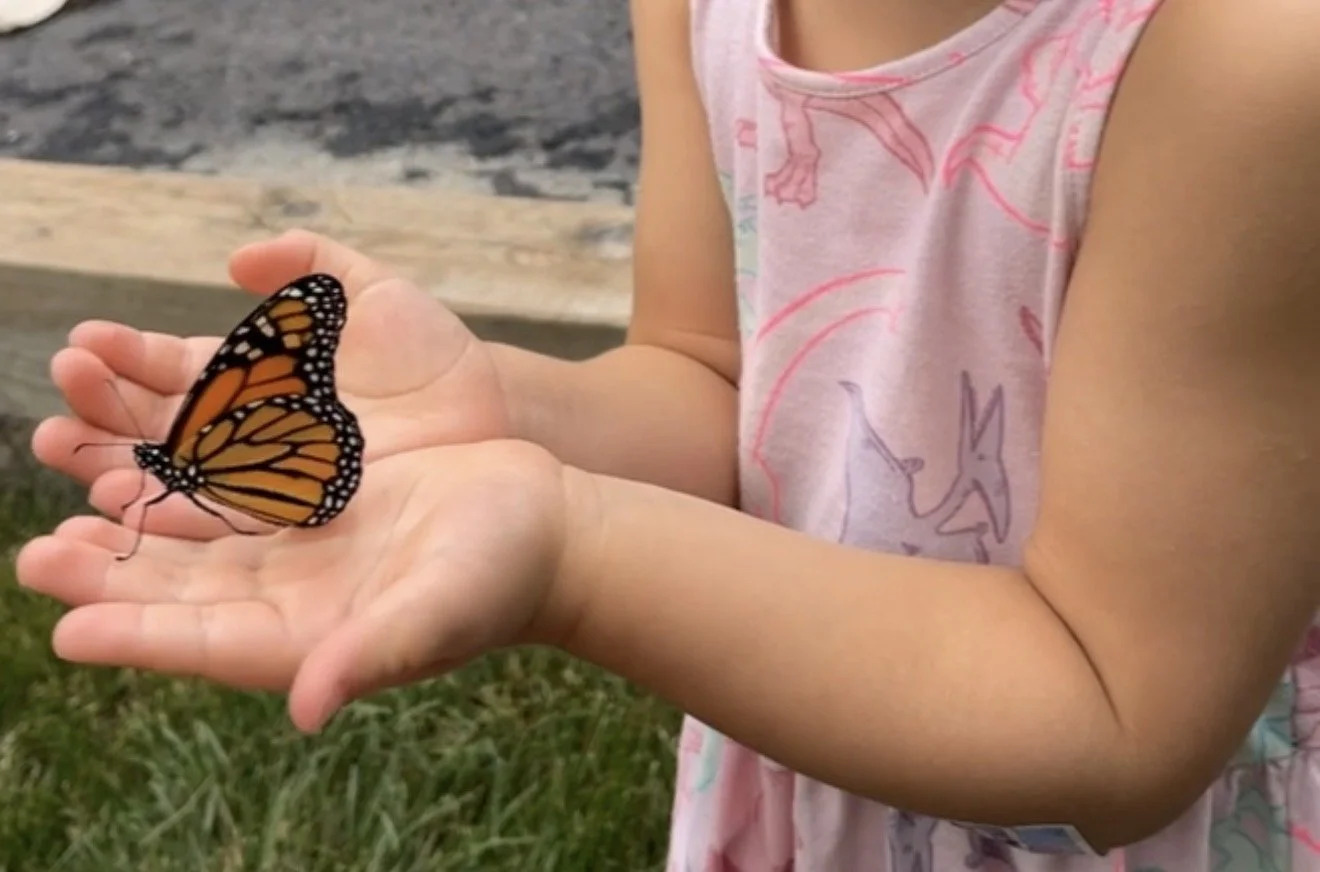
Wonder. Noticing the small magic in a butterfly, a cloud, a puddle, a song. (I've raised monarch butterflies for more than 15 years, and I think that child-like awe is part of why they mean so much to me.)
Spontaneity. Saying yes to something just because it sounds fun.
Honest feeling. The clear, simple way children cry when they're sad and laugh when they're delighted.
Intuition. The sense you had as a child about who was safe, what was going on in a room, what someone was really feeling, before you were taught not to trust it.
Creativity. The drawings, stories, songs, and pretend worlds you made without wondering whether they were any good.
There's also something I call the wise child: the part of you that already knows what you need. Often, when someone connects with their younger self, that part doesn't just carry pain. It carries clarity. It knows what it loved, what it wanted, and what felt true, long before the world weighed in.
A gentle way to begin reconnecting is to ask:
What did I love to do when I was 6, 8, or 10?
What was I doing when I lost track of time?
What made me feel free?
Is there a small version of that I could bring back this week?
You don't need to be dramatic about it. Fifteen minutes with a box of crayons, a walk with no destination, or a song you loved at ten played a little too loud can open the door.
Where the inner child lives in the body and nervous system
The younger parts of us aren't stored only as memories we can talk about. Much of early experience is held below language, in the nervous system, in the body, and in the way we move through the world. That's part of why you can understand your childhood perfectly well and still feel small, frozen, or panicked in certain moments.
Clinically, this is the nervous system responding to a present cue as if it were an old threat. Energetically, I often sense it as a younger part of a person that seems to be holding a particular feeling in a particular place. Whichever language you prefer, the experience is similar.
People describe it in many ways:
A sudden drop. Your stomach falls when someone is disappointed in you.
Freezing. You go blank, your body goes still, or you can't get the words out.
A rush of heat or a racing heart when you feel criticized, even gently.
Heaviness in the chest when you think about a certain time, person, or place.
A tight throat when it's time to say what you need.
The urge to flee or to please. You want to run, or you want to smooth things over immediately.
Feeling very young. Your posture curls in, your voice softens, your sense of your own age shifts.
This is why inner child work works best when it includes the body. Simply telling yourself "I'm safe now" is not always enough for a nervous system that learned otherwise. It usually needs to feel it, through slow breathing, warmth, grounding, gentle movement, and steady, kind attention over time.
Some simple ways to begin:
Place a hand on your chest or belly when you notice a young feeling arise. Breathe slowly and stay with yourself for a few minutes.
Feel your feet on the floor and name what you see around you. Orient to the present: "I'm here. I'm an adult. I'm in this room."
Wrap yourself in a blanket or hold something soft.
Speak to yourself in the voice of someone kind. Even a few quiet words like "I'm here" can shift how your body responds.
As a nurse, I'll add the same note I give everyone: physical symptoms can have many causes, so please have anything persistent checked by your healthcare provider. This work is meant to sit alongside good medical care, not replace it.
Journaling prompts and gentle practices
Pick one and let it be small. Write by hand if you can, set a timer for ten minutes, and keep a comfortable, grounded spot nearby. There's no right way to do this. If a prompt feels like too much, skip it.
Prompts to start with
Getting to know them
How old do I feel when I'm upset or afraid? What is happening around me when that age shows up?
What did I love as a child? What did I do for hours without noticing?
What did I need most as a child that I didn't get enough of? (Attention, comfort, safety, reassurance, freedom, being listened to?)
What was my role in my family? What did it cost me?
Messages you absorbed
What did I hear about myself growing up, out loud or unspoken?
Which feelings were allowed in my home? Which were not?
Finish these sentences: "When I was little, I learned that..." / "I decided I had to be..." / "I promised myself I would never..."
Meeting them now
If I could sit down with myself at the age that comes up most, what would that child look like, and what would they be doing?
What would they want me to know?
What do they need from me right now, this week, in a small and doable way?
What would I say to a child I love who was in the exact same situation?
Practices to try
A photo practice. Find a photo of yourself at the age that keeps coming up. Sit with it for a few minutes. Notice what you feel toward that child. Often, we're far kinder to a photograph of a child than we've ever been to ourselves. Let that kindness be a clue.
A letter to your younger self. Choose an age and write to them. Tell them you see them, tell them what they went through mattered, and tell them what you wish someone had said. Start with "Dear little me," and see what comes.
A letter from your younger self. Then switch. Using your non-dominant hand if that helps, let that younger part write to you. What do they want to say? What are they afraid of? What do they need?
A simple check-in. Once a day, ask silently: "How are you doing in there? What do you need right now?" Then listen for whatever comes, a feeling, a word, an image, a body sensation. It might be quiet at first. Keep asking gently.
Small acts of reparenting. Reparenting means giving yourself, as an adult, some of what you needed then. It can be as simple as going to bed when you're tired, asking for help, eating something warm and nourishing, saying no without a long apology, or planning something fun. Small, consistent kindness builds trust with the younger part of you.
Play, on purpose. Schedule something with no goal and no audience. Paint badly. Build a blanket fort. Swing at the park. Notice what your body does with permission.
Ground before and after. Begin and end any inner child work with feet on the floor, a few slow exhales, a drink of water, and a look around the room. Let your body know you're back in the present.
Going slowly, and working with support
Meeting your younger self can be tender. It can bring up sadness, anger, relief, or a feeling of being very small. All of that is normal, and it's also a reason to move with care.
A few guidelines I offer everyone:
You don't have to relive anything. Inner child work is not about diving back into painful memories. You can acknowledge what happened from a steady place in the present, as the adult you are now, without going back in.
Start with the gentle parts. Begin with play, kindness, and small check-ins before you go anywhere heavy. Let trust build.
Notice your window. If you feel flooded, panicky, numb, or shut down, stop. Ground yourself, do something soothing, and come back another day. Slower is not less effective.
Don't force it. Younger parts open up when they feel safe, not when they're pushed. If nothing comes, that's okay. Be patient and keep showing up.
Have someone with you. Many of these wounds formed in relationship, and they tend to soften most in relationship, with someone steady who can listen without judgment or hurry.
If you have a history of trauma, abuse, an eating disorder, or a mental health condition, or if this work feels overwhelming, please work with a licensed mental health professional alongside anything you explore here. My work is meant to complement that kind of care, not replace it. Inner Soul Wellbeing is not a medical or mental health practice and does not diagnose or treat any condition.
You don't need to have a hard story, or a big reason, to ask for support. Wanting to know yourself better is enough.
Bringing this into a session
You don't need to complete every prompt, or have your story figured out, before you reach out. Many of my sessions begin with someone saying, "I read something and it stayed with me." That's a good place to start.
If you'd like to take this further with me, here are some things worth bringing:
The age or ages that came up most as you read.
One or two of the wounds above that sounded like you, in your own words.
A recent moment when you felt much younger than you are, and what happened right before.
Anything from the journaling, even a single sentence or a half-finished letter.
Where you noticed something in your body.
The protector you recognized most, and what you think it's trying to prevent.
A memory of something you loved to do as a child.
In a session, we might talk through what you've noticed, work with the body and energy to help that younger part feel safe and settled, and explore what she or he needs from you now. You set the pace, and nothing has to be forced or revisited more than you want to.
If something here resonated, I'd love to hear from you. You can book a free 20-minute call to talk about what's coming up and where it might make sense to begin, or go straight to an Inner Soul Session if you already know you want to dig in.
The younger you did the best they could with what they had. They may have been waiting a long time for someone to notice. You can be that someone.